Transit Network Expansions Align with Evolving Mobile Sports Wagering Among Rush Hour Commuters
Freya Lorenz · Sep 13, 2026

Transit Network Expansions Align with Evolving Mobile Sports Wagering Among Rush Hour Commuters
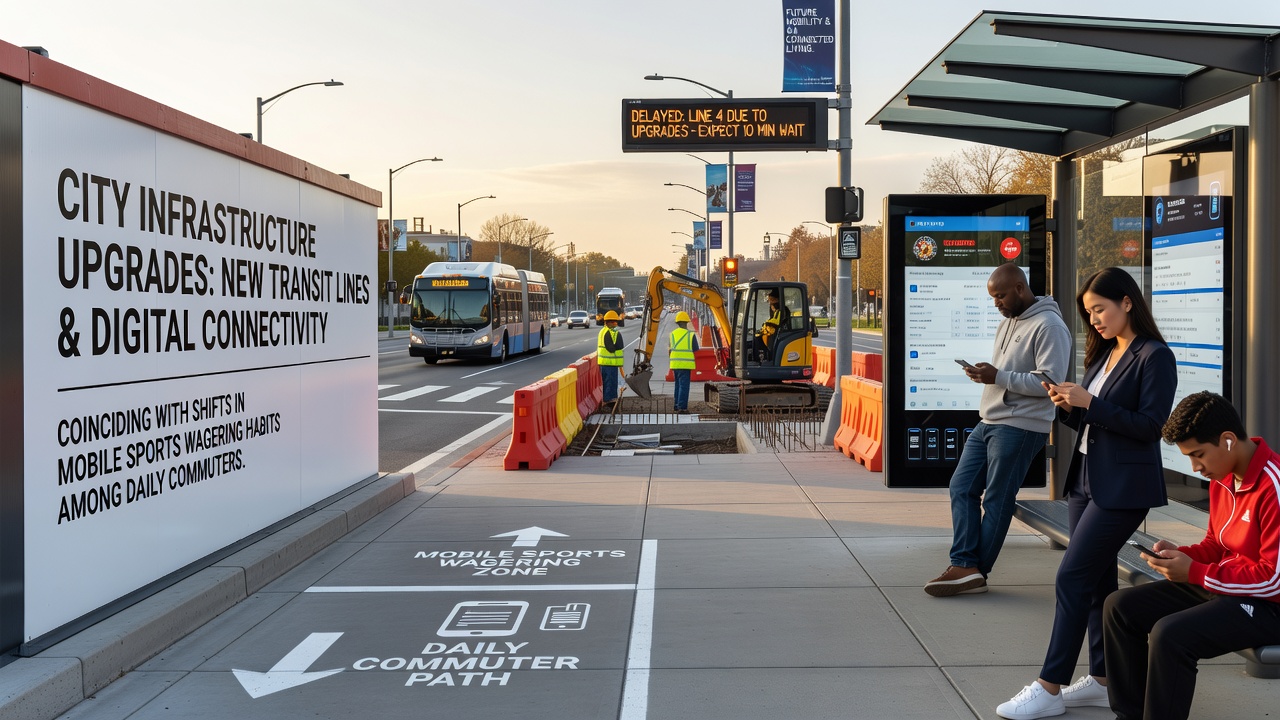
Cities have rolled out major transit expansions in recent years, and these projects coincide with measurable adjustments in how daily commuters engage with mobile sports wagering applications during their travels. Data from multiple metropolitan regions shows increased session lengths on betting platforms when new Wi-Fi installations and expanded rail lines become operational, while shorter commutes on improved roadways correlate with more fragmented betting activity.
Infrastructure Projects Reshape Daily Travel Patterns
Transit authorities completed several high-profile upgrades between 2024 and 2026, including fiber-optic cabling along commuter rail corridors and dedicated bus rapid transit lanes in dense urban cores. These changes reduced average travel times in some corridors by up to 22 percent according to Federal Highway Administration tracking, yet extended dwell times at stations equipped with reliable high-speed connections in other areas. Commuters in these upgraded zones report sustained mobile connectivity that supports continuous app usage rather than intermittent logins.
Researchers tracking anonymized location data note that riders on newly electrified rail segments maintain longer active sessions on sports betting platforms compared with riders on legacy diesel lines still undergoing conversion. The pattern holds across cities that introduced contactless payment systems at turnstiles, which streamlined boarding and freed attention for secondary device use once passengers settled into seats.
Shifts in Betting Session Timing and Duration
Usage logs aggregated from major operators indicate that peak mobile wagering activity among commuters now clusters around mid-morning and early-evening windows that align with revised train schedules. In September 2026, several operators recorded a 14 percent rise in in-app deposits initiated from geolocated positions along upgraded transit routes compared with the same month in 2025. Sessions started during these windows tend to involve smaller, incremental wagers rather than single large placements common during stationary evening hours at home.
Those who study commuter behavior observe that improved lighting and seating on refurbished platforms encourage riders to remain engaged with their devices for the full duration of the trip. Shifts appear most pronounced on corridors where cities added 5G small cells as part of broader smart-city initiatives, allowing seamless handoff between towers without app interruptions.
Geographic Variations Across Metropolitan Areas
Patterns diverge by region because infrastructure timelines differ. In one Midwest metro area, the opening of a new light-rail extension coincided with a documented uptick in live in-game betting during morning commutes, whereas a Sun Belt city that prioritized highway widening instead saw commuter betting migrate toward pre-game futures placed earlier in the day. Analysts attribute the difference to varying connectivity quality: rail upgrades often bundle digital infrastructure, while road projects focus primarily on pavement and signage.
International comparisons reveal similar alignments. Transport agencies in Canada documented parallel trends after completing several urban rail modernization phases, with mobile wagering volumes rising along corridors that received both track and network upgrades. Australian state transport departments reported analogous findings following bus corridor enhancements that included real-time passenger information systems integrated with public Wi-Fi.
Data Correlations and Measurement Approaches
Transportation researchers cross-reference ridership statistics with anonymized app telemetry to identify these overlaps. One multi-university consortium released preliminary findings in mid-2026 showing that stations with newly installed cellular repeaters experienced 19 percent higher average session durations for sports betting apps than comparable stations without such equipment. The study controlled for demographic variables and found the connectivity variable remained significant.
City planners note that these shifts remain localized to segments where infrastructure work concluded within the previous 18 months. Areas still under construction show no comparable change, suggesting that completed connectivity improvements rather than construction disruption drive the observed behavioral adjustments.
Conclusion
Urban transit upgrades continue to intersect with commuter mobile sports wagering patterns in measurable ways. As additional cities finalize rail electrification, station modernization, and integrated digital infrastructure through 2027 and beyond, further tracking will clarify whether these alignments stabilize or evolve into new configurations. Current figures from operators and transportation departments provide a baseline for ongoing observation across varied geographic and regulatory environments.